 15thC men |
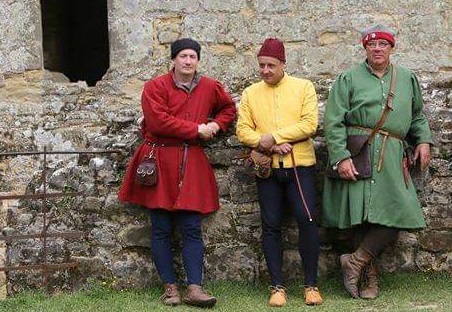
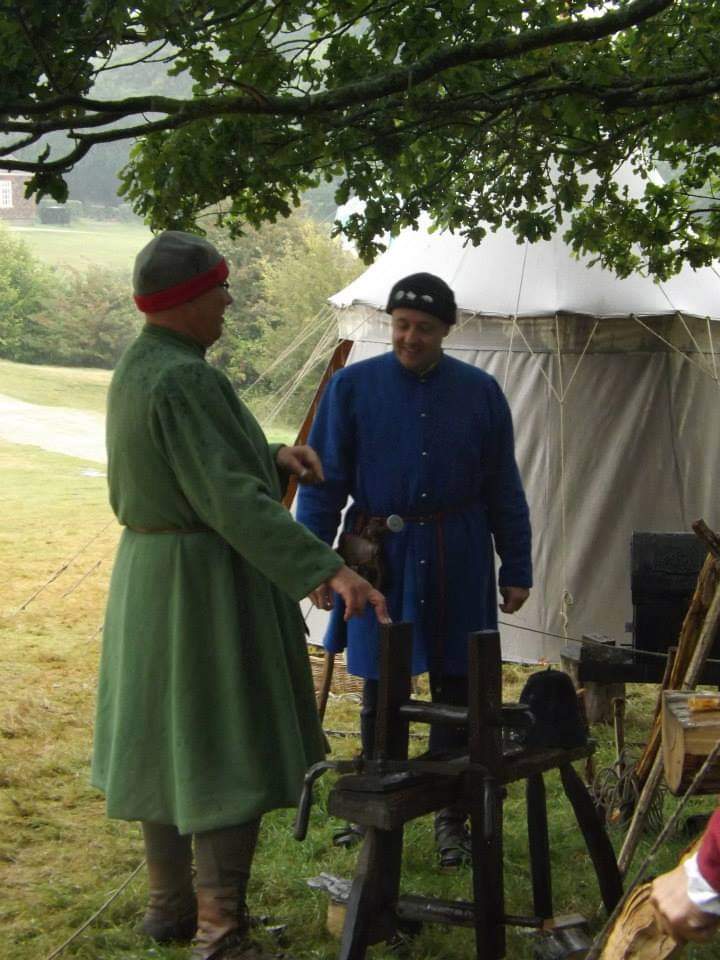
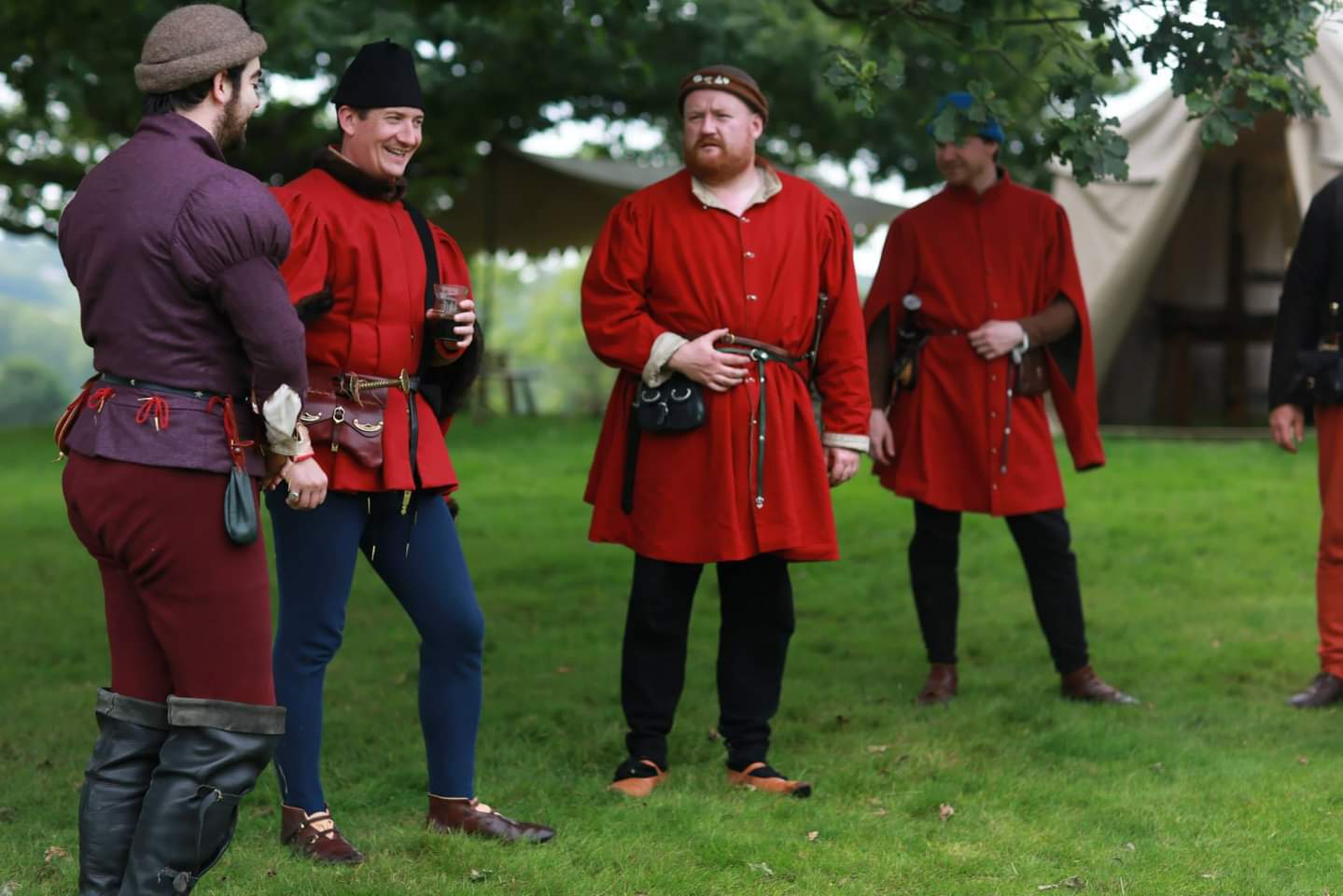
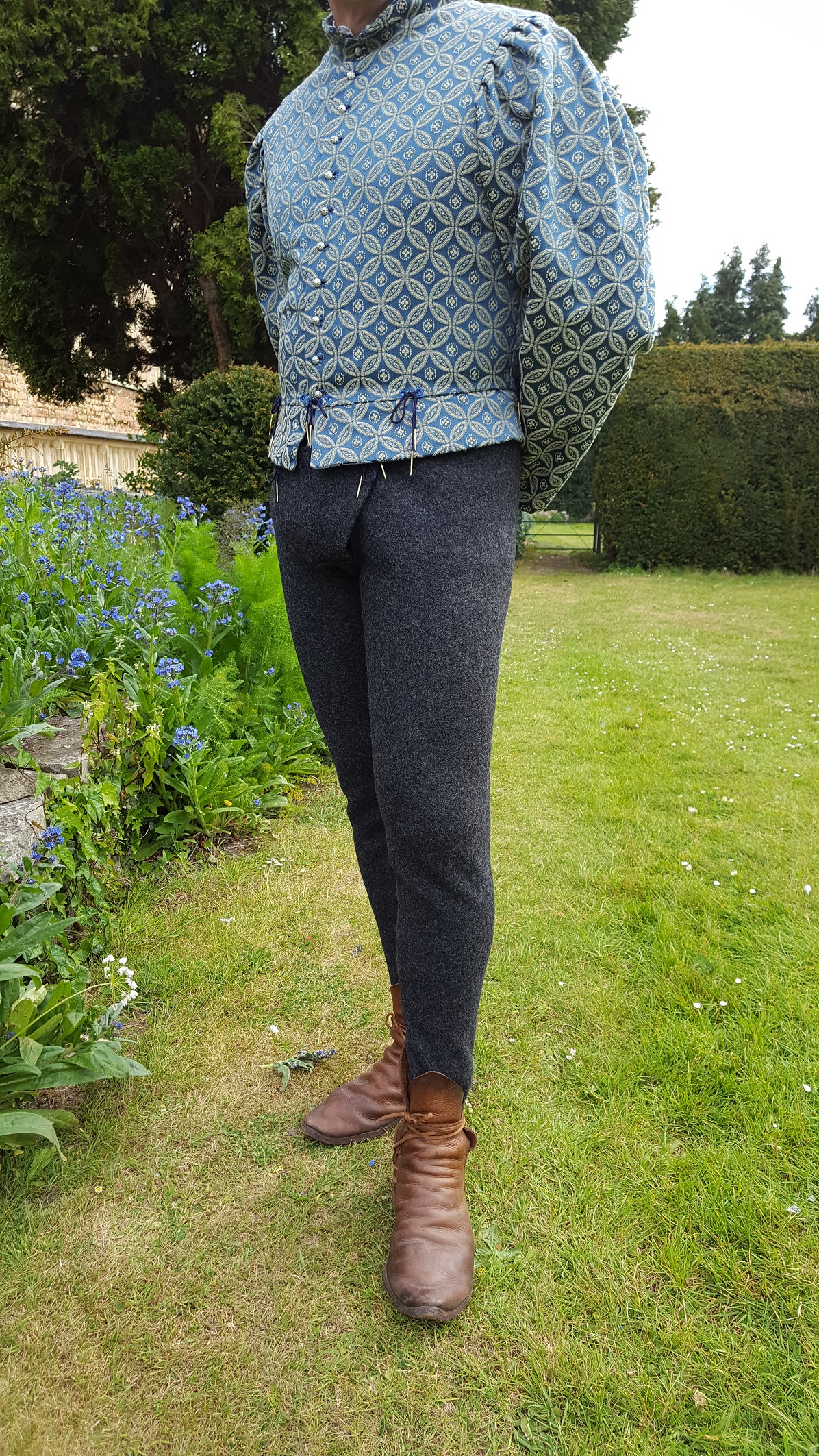
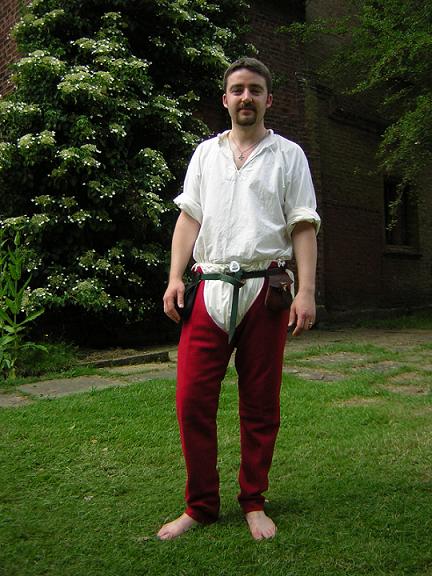
Menswear at it’s simplest consisted of underwear (shirt and braies), joined hose attached with pointed ties to a doublet, a coat or gown and hat. To be seen outside of the home (or manual working environment) without these basic layers was to be improperly dressed.
Shirt £45, Braies £35
Joined hose from £110 (footed £125)
Doublets from £155
Coats from £155
Pleated Gowns from £245
Hoods £45
Hats from £15 |
 15thC Men |
 15thC Man |
 15thC Men |
 15thC Men |
 15thC Men |
 15thC Men |
Related Searches: 15th Century, Doublet, Hats, Hoods, Hose, Menswear, Tunic
|
|
|
|
|
|
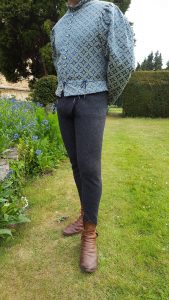 Joined Hose |
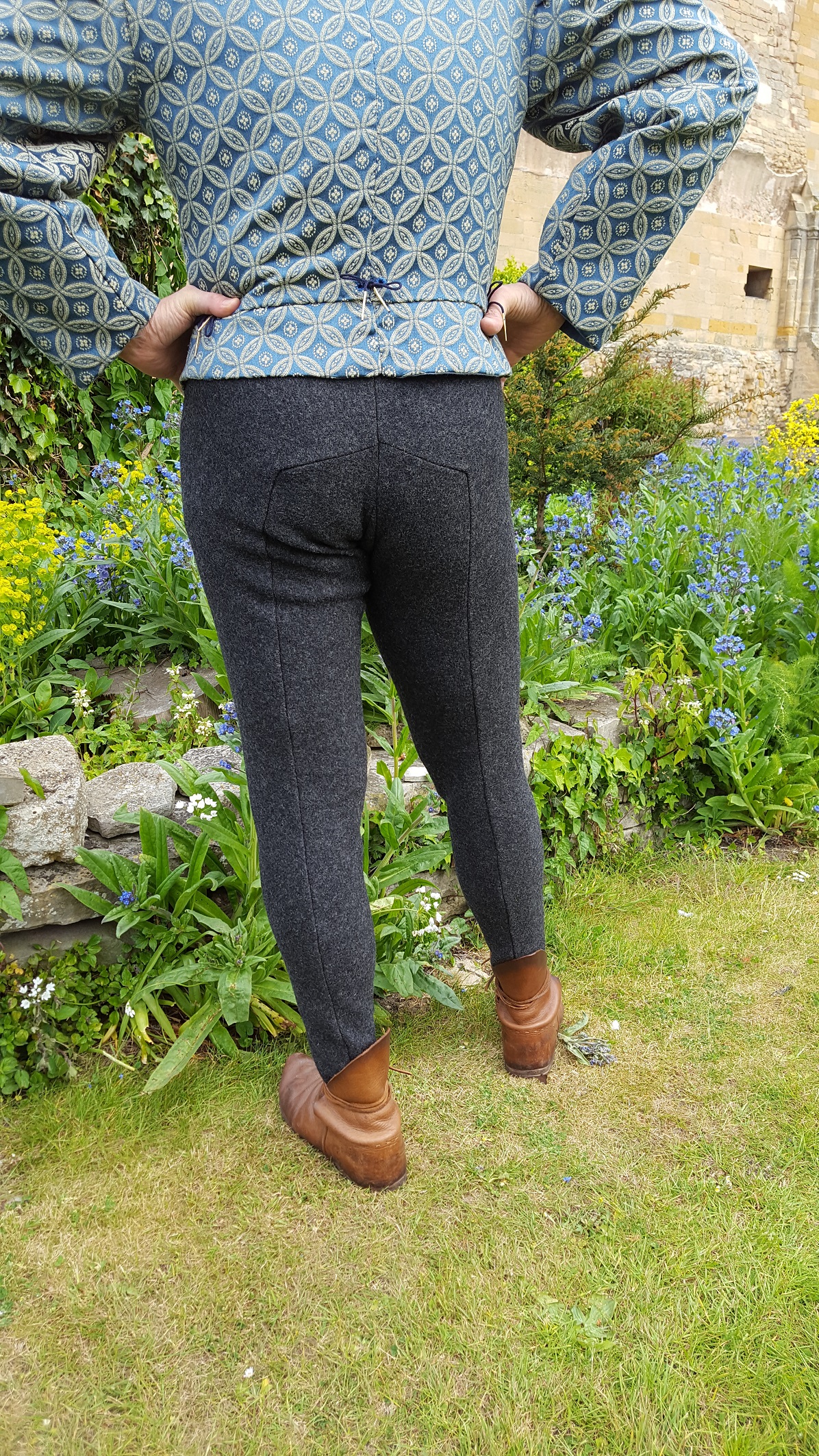
In the later 14th and 15th century, hose rise further up the leg until they joined in the middle, at best guess around 1420. Often footed or stirruped, early joined hose barely reached above the widest part of your bottom; only at the end of the century had they risen to normal waist level. Braies became smaller as they had less area to cover.
Joined hose – stirruped £110, footed from £125 |
 Joined Hose – rear |
Related Searches: 15th Century, Menswear
 13th/14th Century Single Leg Hose and Braies |
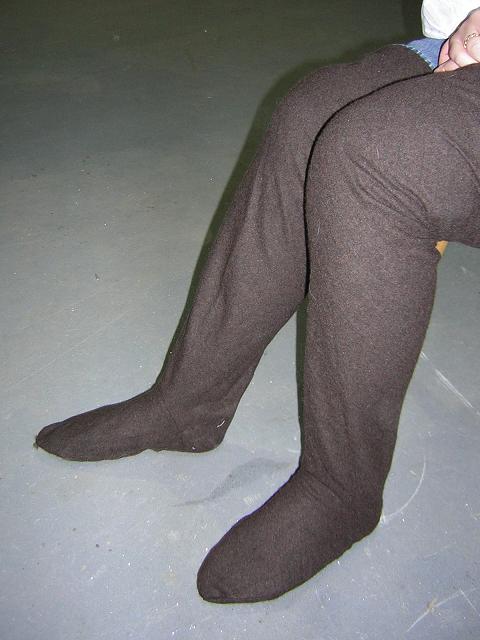
Hose began as simple foot coverings and extended upwards covering more of the leg.
During 13th and much of the 14th century hose were single-legged garments (split hose) with long legged (pipe) braies filling the gap between. Hose fasten directly to the waistband (breech girdle) of the braies. Single leg hose (pair) £75, footed £95 |
 13th/14th Century Single Leg Hose (parti-coloured) |
Related Searches: 13th Century, 14th Century, Menswear

Shifts and hose are the foundations of womenswear throughout much of history.
Shifts were linen under-garments very similar to mens shirts, just longer and fuller. In the 13th, 14th and 15th century nothing was worn underneath the shift.
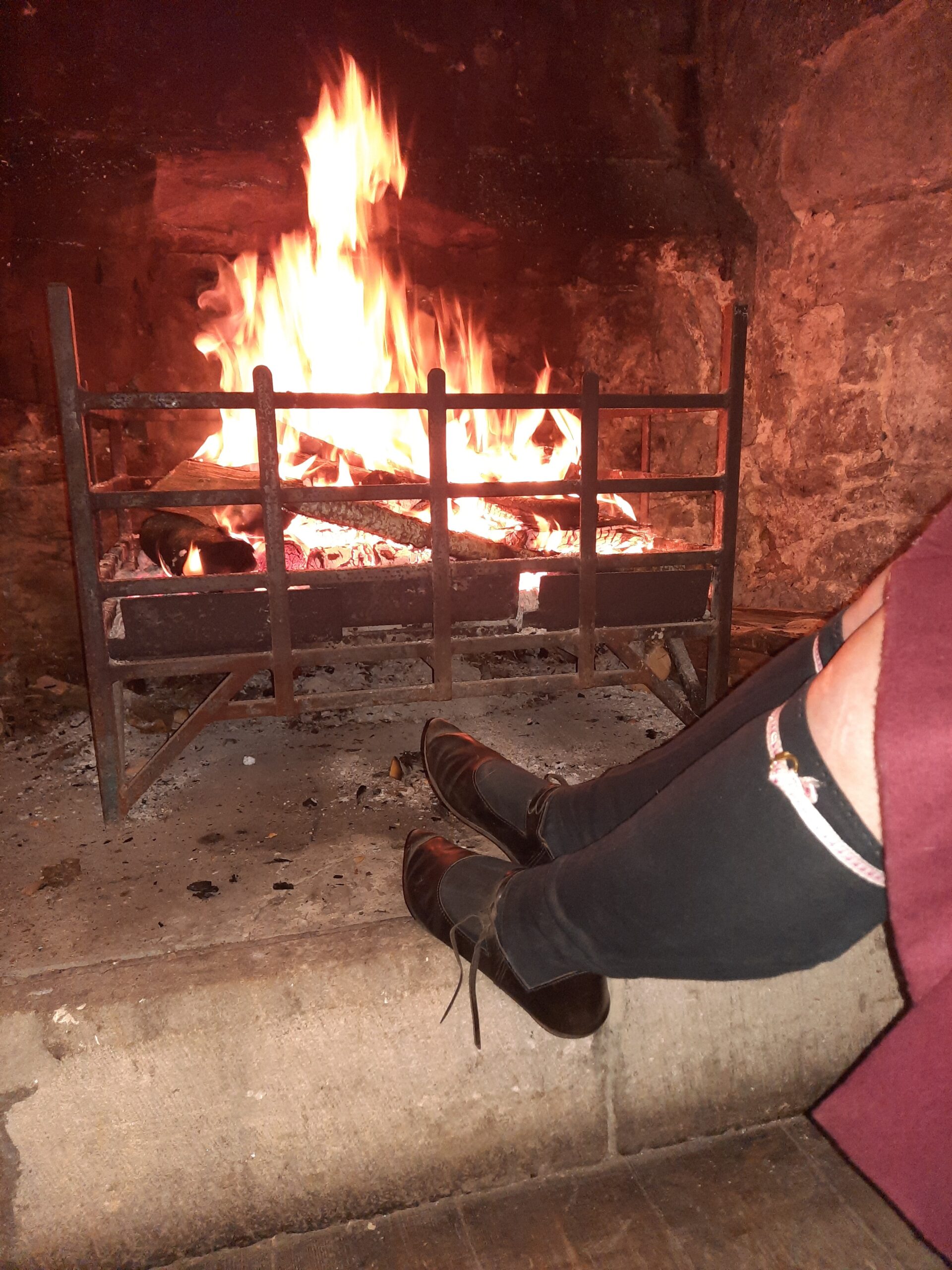
Women’s hose were knee-length socks cut from woven cloth. They were often quite loose and held up by garters just below the knee.
Linen shifts £65
Half-hose in linen or wool £45
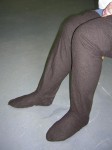
Ladies Half-Hose
Related Searches: 13th Century, 14th Century, 15th Century, Hose, Shift, Womenswear